The Diversity Alliance and Advisory Team was formed in July of 2020 to build trust in the community under the 21st Century Policing Model. Community members and police staff have open and honest discussions about relationships between police and marginalized communities. The team has had many difficult conversations, but has become a group that inspires trust and communication.
Mission:
The team's goal is to strengthen the relationship between the Albany Police Department and the community through trust, respect, and mutual understanding. We do this by establishing an environment that promotes honest dialogue, mutual respect, education, and partnership.

Values:
- Open conversations
- Collective honesty
- Respect
- Empathy
- Compassion
- Acceptance of the experiences of others
- Not making assumptions about intent
- Courage
- Mutual trust
- Effective communication
- Impact what we can control
- Humility
Commitment:
We will commit to regular attendance at established quarterly meetings with shared leadership and set agendas, as well as at activities we organize to promote continuity.
Community Members:
- Lisa Avery
- Stacey Bartholomew
- Marcia Beltran
- Heather Carmichael
- Jason Dorsette
- Nancy Greenman
- Earlean Wilson Huey
- Kelsey Nava-Costales
- John Phillips IV
- Lisa Walker
Department Members:
- Marcia Harnden
- Gabe Flores
- Tara Williams
- Beth Huber
- Laura Hawkins
- Steve Corder
- Gina Bell
- Jerry Drum
- Buck Pearce
- Details
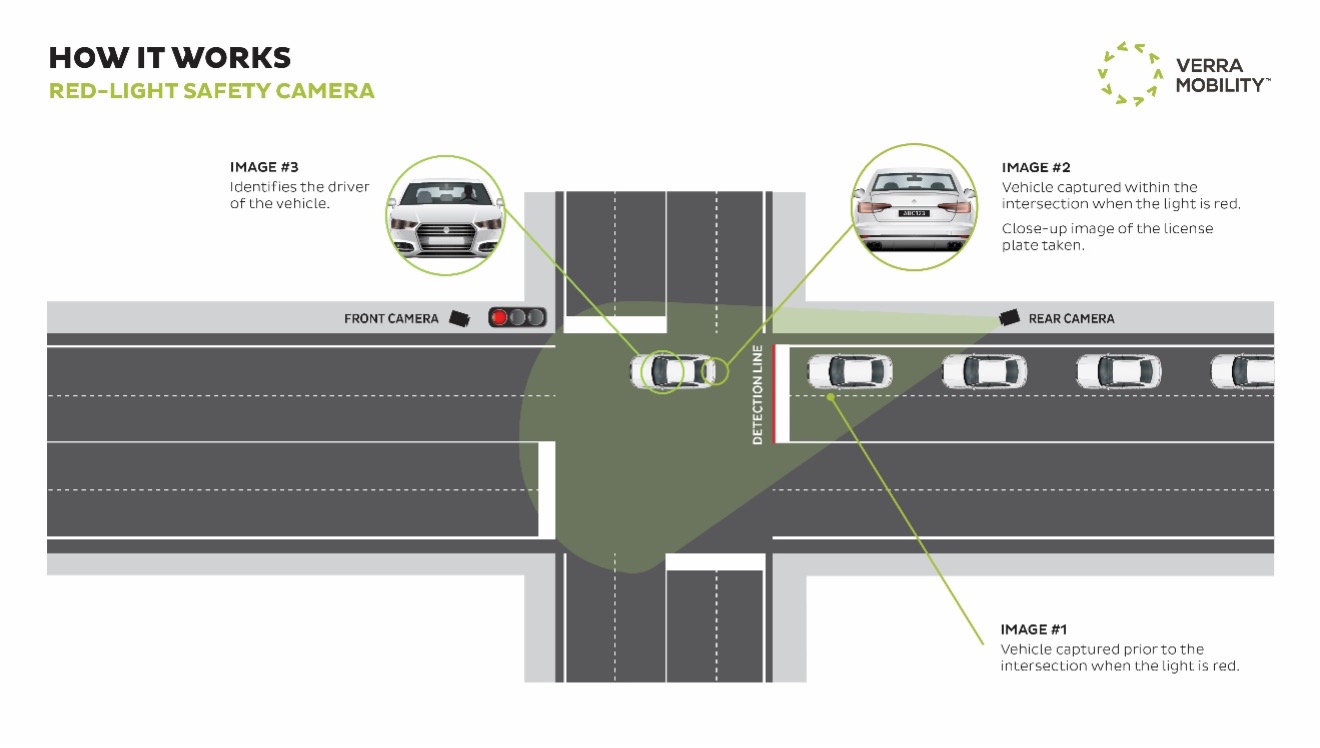
The Albany Police Department utilizes automated red light and speed enforcement cameras at several City-owned intersections in Albany.
Frequently Asked Questions
Check out our frequently asked questions about automated red light and speed enforcement.
- Details
Speed Limit Update on Santiam Road and Burkhart Street
A recent joint speed study by ODOT and the City determined that a posted speed of 30 mph is appropriate for the segment of Santiam Road and Burkhart Street between Main Street and Highway 20. This replaces the previous 25 mph limit. Automated speed and red‑light enforcement equipment at Santiam Road and Geary Street has already been adjusted, and updated signs are installed. State law required the existing posted speed to remain in effect until that work was completed.
Some residents have asked why the earlier speed was 25 mph instead of 55 mph. The 25 mph limit has been in place for decades, likely established under older rules that automatically set speeds in residential areas. Santiam Road met those criteria. The road was already posted at 25 mph when it transferred from Linn County to the City of Albany in 1990. Current state rules for urban arterial streets allow limits between 20 and 35 mph. It has never been treated as a 55 mph roadway.
Open data dashboard View and filter citations by date, charge, intersection
Open dashboard
View and filter citations by date, charge, intersection
Why are these cameras being installed?
To reduce traffic speeds to within posted speed limits. The goal is to reduce the chances of dangerous collisions.
What is the cost of installing these cameras?
The City is not paying for installation but will pay the contractor a monthly service fee for the cameras over a five-year contract.
Where does the revenue go from the traffic light cameras?
The system's operating costs are deducted from revenue, including the camera service fee, mandatory payments to the State and County, and City costs for reviewing citations and court processing. Citation revenue does not generate significant excess funds for the City.
How fast can you exceed the speed limit before being issued a ticket?
The cameras have a threshold for activation, but the goal is to reduce the chances of dangerous collisions by ensuring drivers follow posted speed limits.
How do the cameras handle right turns on red lights?
Where permitted, drivers can turn right at a red traffic light, whether a solid red light or a red arrow. However, they must first:
- Come to a complete stop
- Check for bicycles, pedestrians, and oncoming and u-turning cars before proceeding, making sure it is safe to turn
- Yield the right of way to traffic lawfully within the intersection
A citation can be issued to drivers who do not come to a complete stop first before they take a right turn at a red traffic light.
Will the cameras adjust to school days and times?
Yes, the City will work with the contractor to coordinate the cameras with weekends, no school days, and the daily schedules of Greater Albany Public Schools.
How do we ensure the cameras are functioning properly?
The system is checked several times a day, and calibration is verified.
Do computers monitor these cameras, or does a person watch the video?
Videos are based on set criteria, and a sworn officer reviews each potential violation before a citation is issued.
Can you tell me if I triggered a citation, or do I need to wait?
Unfortunately, there is no method for us to look up each potential violation. There are a few reasons why a camera may have flashed:
- You may have committed a violation.
- A vehicle near you in the intersection may have committed a violation.
- The camera(s) may have been adjusting or recalibrating, and no violation was committed.
A sworn officer reviews each potential violation before a citation is issued. If your action was deemed a violation, you should receive a citation package in the mail within about two weeks.
Do I have access to watch the video if I get a citation?
Yes, instructions on how to view the video of your violation online are included with your citation.
What happens if I was issued a citation but someone else was driving my car?
If you are issued a citation for a violation in which you were not the driver, you can submit a form declaring that you were not the driver, along with a copy of your driver's license. For individuals this is called a Certificate of Innocence. For businesses this is called a Certificate of Non-Liability. Falsifying these forms may result in additional charges being filed against you.
What if the video of the driver doesn't match the vehicle's registered owner?
The officer will attempt to identify the driver through other means.
What if the driver uses a license plate shield?
License plate shields are illegal in Oregon.
Will drivers be cited as soon as cameras go live?
Education is a priority, so there will be a warning period for the first 30 days from the "go live" date at each intersection. During this period, drivers who violate the speed limit will not receive citations from the cameras.
Why don't we have these cameras in every school zone?
The current law requires cameras to be utilized only at a signalized intersection, and some school zones aren't equipped for them.
Will more cameras be installed at other intersections in the future?
Eight cameras will be at four intersections by the end of 2025. Each intersection will have two cameras, one to cover each approach.
If accident stats go down, will the cameras be removed?
No, the cameras will remain operational as the intent is to slow traffic to enhance safety. A reduction in the number of collisions is only one measure of improved safety.
Will accident stats be published before and after the cameras are installed?
These statistics are reported regularly on our website.
- Details
The Safe Return Program is a voluntary, local, photo-based program designed to assist officers during contacts with members of the Albany community who have disabilities and ensure their safe return home.
Sign up a dependent or loved one today!
This program provides law enforcement with emergency contact information, detailed physical descriptions, physical address, a photograph(s) of the individual, known routines, favorite attractions, behaviors, and/or special needs of the individual. The information can assist in communicating with, locating a residence for, or handling an emergency involving an individual with special needs when law enforcement contact is made. It is intended for those with developmental and intellectual disabilities such as, but not limited to:
- Alzheimer's or Dementia
- Autism Spectrum Disorder
- Down Syndrome
- Details
The Albany Police Department has created two "Safe Exchange Zone" spots located in our parking lot at 2600 Pacific Boulevard SW. Both are under 24/7 video surveillance. They provide residents a safe, alternative location for private party transactions including online purchases and for child custody transfers instead of meeting a stranger at a private residence or unfamiliar location.
Safe Exchange Zone Tips:
- No appointments are necessary when using the Safe Exchange Zone.
- Police personnel will not assist with any transactions.
- The Safe Exchange Zone is meant for person-to-person transactions. Property may not be dropped off and left unattended.
- The Safe Exchange Zone is not a drop off where parents can leave children for a later pick-up time. All exchanges must be person-to-person.
- Sellers are required to take their property with them if the buyer does not show up.
- Only conduct transactions with local buyers/sellers.
- Do not go to a transaction alone.
- Make sure a friend or family member is aware of the details.
- Complete the transaction during daylight hours.
- Be extra cautious in buying/selling valuable items.
- Only use cash or money orders.
- Trust your instincts; if it sounds like a scam it probably is a scam.
- If someone is not willing to come to the Albany Police Department to complete a sale, it is probably not a legitimate transaction.
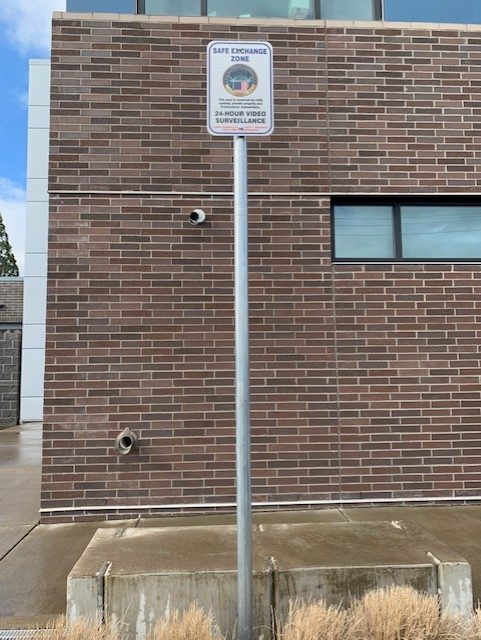
To learn more about Safe Exchange Zones, or to find more in your area visit: http://www.safetradestations.com/safetrade-station-list.html
- Details
