Grow Smarter!
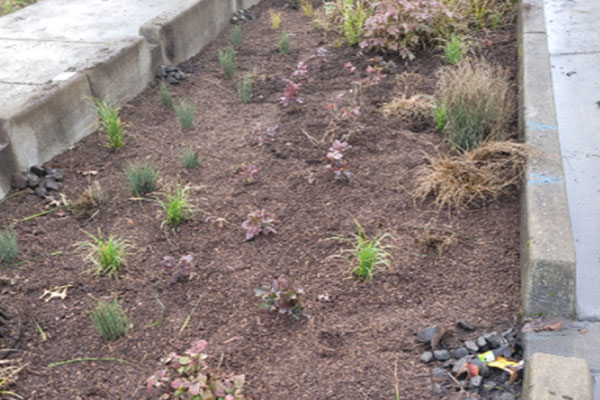
Hub City Compost is a Class A, Exceptional Quality biosolids product that can be used in home gardens and landscaping, as a soil amendment (improving drainage in clay soils, adding nutrients, and reducing the frequency of watering), or even just as a ground-cover mulch. It's now available to retail and wholesale customers.
Hub City Compost outperforms other materials on the market, with a price that can't be beat...
Retail orders:
- $20/yard
- 1-yard minimum*
Wholesale orders:
- $15/yard
- 5-yard minimum*
*You must pick up your entire order in a single load.

How to purchase
How to purchase
Step 2
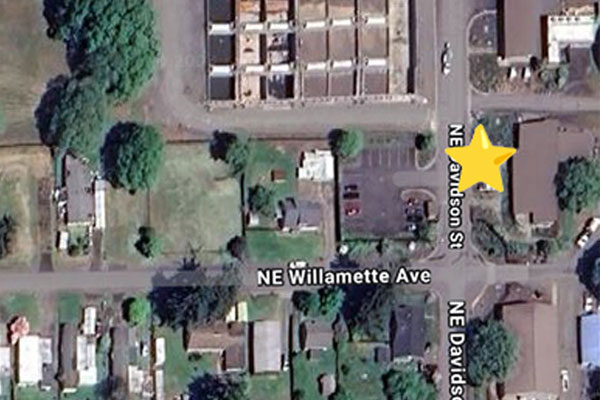
Pick up your entire compost purchase on the scheduled date and time requested on the purchase form at:
405 Davidson St. NE
Albany, OR 97321
Step 3
Please pull into the front gate and pull onto the side of the road in front of the Control Building (first building on your right, Building 95).
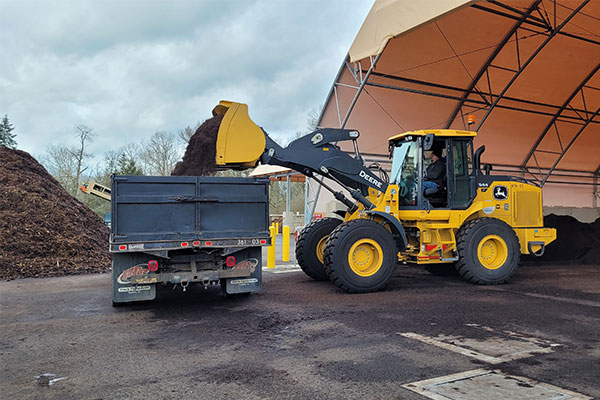
An operator will greet you, lead you down to the compost loading area, and load your vehicle and/or trailer for you.
About our composting process
About our composting process
The City’s composting facility began operating in January 2023 and consists of covered aerated static piles (CASP), with in-ground aeration using Engineered Compost Systems (ECS) technology and a biofilter odor-control system.
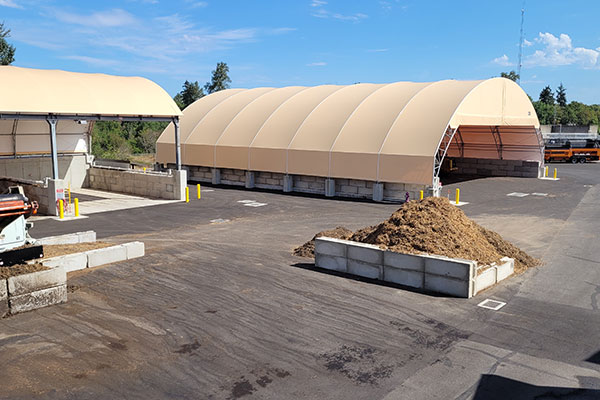
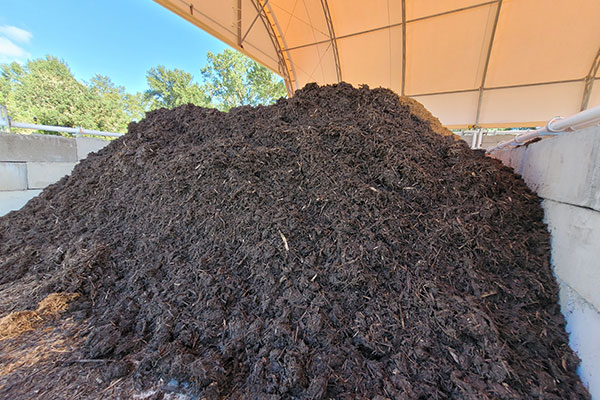
Biosolids from the Albany-Millersburg Water Reclamation Facility (AM-WRF) are mixed with ground-up yard and tree waste using a specific “recipe” and placed into one of four composting bays. The mixture of nitrogen (biosolids) and carbon (wood), along with the right amounts of oxygen and water, initiates a controlled biological decomposition process known as composting. This is where microorganisms eat the organic waste and break it down, which generates heat that kills pathogens and stabilizes the material. The result is a stable, nutrient-rich organic compost that can be used as a soil amendment.
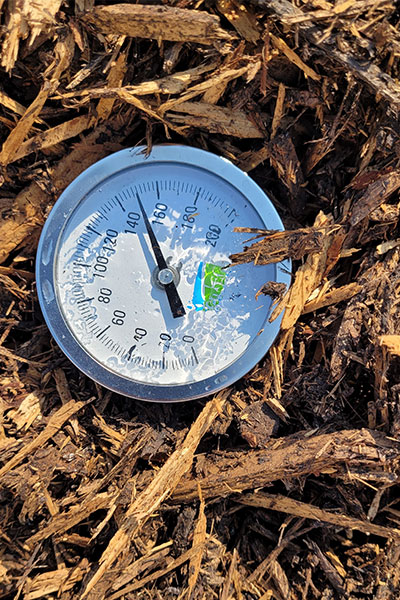
The compost piles at the AM-WRF are continuously monitored for temperature, which controls the aeration system for consistent treatment throughout the pile. The material must reach and maintain a temperature of 55°C (131°F) or higher within the prescribed timeline required to kill the bacteria and pathogens. It is then moved and mixed to allow additional composting, further stabilizing and “curing” the material into mature, rich compost. Overall, this composting process takes about 6 weeks per batch.
Environmental benefit
Albany and Millersburg selected composting for biosolids treatment because it provides overall environmental benefits to our communities and turns waste into a desirable product. The composting system also reduces greenhouse gas emissions by increasing soil carbon sequestration and preventing methane emissions through aerobic decomposition.
What are Biosolids?
Biosolids are a byproduct of wastewater treatment. During treatment, the liquids are separated from the solids. These solids are then physically and chemically treated to produce a semisolid, nutrient-rich product known as biosolids. Biosolids can be further treated to produce a product that can be beneficially used as fertilizer or an amendment. Depending on the level of treatment and the method used, two regulatory types of biosolids can be produced: "Class B" and "Class A". The Albany-Millersburg WRF produces Class A compost from our biosolids. Class A compost is highly regulated and has unrestricted public use.
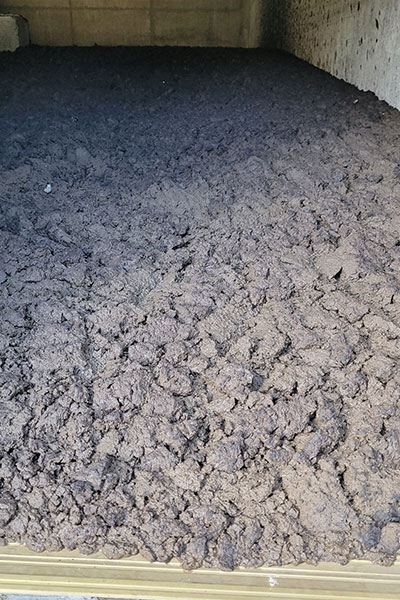
From byproduct...
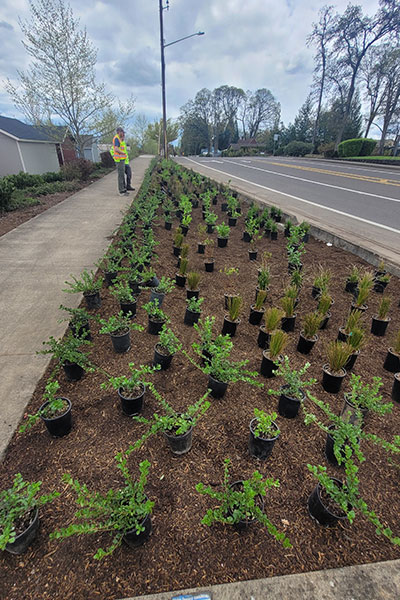
...to safe, useable fertilizer.
Exceptional quality compost
Exceptional quality compost
The City’s compost is a Class A biosolids product that meets the stringent Exceptional Quality standards of EPA Part 503 Biosolids Rule, which means it can be used anywhere without restrictions, including home gardens and landscaping. When used as a soil amendment, Albany’s compost can help improve drainage in clay soils, add nutrients, and help reduce the frequency of watering. Albany’s compost can also be used just as a ground cover instead of other mulches.
The City’s compost is monitored and tested in accordance with the EPA rules, and annual reports are submitted to the Oregon DEQ.
Test results
Test results are available upon request.
Summary of sampling requirements:
Metals
| Contaminant | Max Level Allowed by EPA | Units | Does our compost meet the standard? |
|---|---|---|---|
| Arsenic | 41 | mg/kg | Yes |
| Cadmium | 39 | mg/kg | Yes |
| Chromium | 1200 | mg/kg | Yes |
| Copper | 1500 | mg/kg | Yes |
| Lead | 300 | mg/kg | Yes |
| Mercury | 17 | mg/kg | Yes |
| Molybdenum | 75 | mg/kg | Yes |
| Nickel | 420 | mg/kg | Yes |
| Selenium | 36 | mg/kg | Yes |
| Zinc | 2800 | mg/kg | Yes |
Pathogens
| Contaminant | Max Level Allowed by EPA | Units | Does our compost meet the standard? |
|---|---|---|---|
| Salmonella sp. bacteria |
<3 | Most probable number/4g total solids |
Yes |
An Award-Winning Product
The Albany-Millersburg Compost Facility has won numerous awards since completing performance testing in January 2023.
The list of awards includes:
- League of Oregon Cities Award of Excellence in recognition of its "Biosolids Composting Project."
- Pacific Northwest Clean Water Association: 2023 Sustainability and Resource Recovery Award
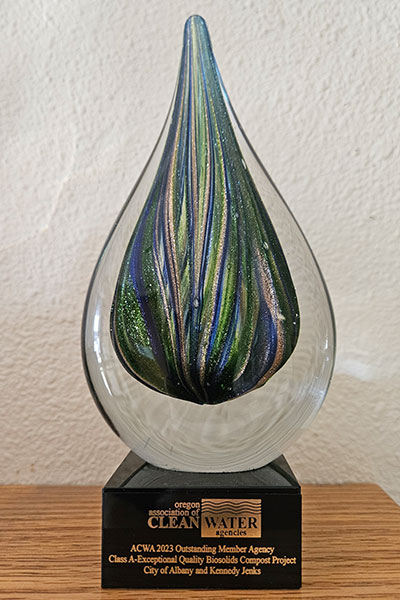
- Oregon Association of Clean Water Agencies 2023 Outstanding Member Agency: Class A Exceptional Quality Biosolids Composting Project
- American Council of Engineering Companies of Oregon: Engineering Excellence Awards 2024 Honor Award: Pivoting into a Class A Biosolids Management Program